
Active restaurant conversations are frequently hard to decipher when surrounding background noise clashes with your hearing. Our specialists can evaluate hearing under both calm and noisy listening conditions to establish why noisy rooms present such difficulty. Once the diagnostic etiology of your difficult hearing is established, we implement personalized clinical and technological strategies.
Understanding the Contrast Between Quiet Hearing and Restaurant Noise
A quiet setting creates an optimal signal-to-noise ratio, ensuring the conversational partner’s voice rises cleanly above ambient sounds. Commercial restaurant spaces present the polar opposite acoustic dynamic. Layered diner voices, kitchen activity, foreground music, and room reverberation muddy speech signals, requiring intense mental strain to follow dialogue.
Such listening challenges typically stem from high-frequency hearing loss, auditory-processing deficits, or accumulated noise-induced trauma. Dim lighting, physical tiredness, conversational distance, and divided attention exacerbate these listening deficits. Certain patients demonstrate normal sensitivity on routine audiograms while struggling significantly during advanced speech-in-noise testing. Communication breakdowns in loud restaurants should be professionally assessed even if one-on-one listening feels uncompromised.
The Audiological Process for High-Frequency Hearing Loss
We initiate evaluation by exploring challenging acoustic environments, acoustic trauma history, subjective tinnitus, prescription drug profiles, and unilateral ear changes.
Clinical pure-tone audiometry identifies hearing threshold levels across various frequencies by delivering sounds through air and bone pathways. High-frequency loss often creates an audiogram pattern in which thresholds become poorer as pitches rise. Diagnostic evaluations may also integrate acoustic tympanometry to check middle-ear pressure alongside word-recognition testing to evaluate speech processing.
Given that isolated quiet booths do not reflect chaotic restaurant acoustics, specialized speech-in-noise testing delivers invaluable diagnostic data. The test assesses word and sentence discrimination as background acoustic competition intensifies. Together, these audiological findings indicate whether the issue involves sound audibility, speech intelligibility, noise-processing dysfunction, or multiple compounding factors.
The Role of Central Auditory Processing Disorders in Adults
A central auditory processing disorder disrupts the neurological transmission and cognitive interpretation of sound waves. The ears may detect tones at expected levels, but the brain may have difficulty organizing competing signals, distinguishing similar speech sounds, or following rapid conversation. Our protocol begins by thoroughly testing peripheral hearing before determining if a specialized central auditory-processing battery or interdisciplinary referral is warranted.
Effective Techniques to Hear Better in Noisy Surroundings
Targeted behavioral changes optimize the acoustic speech signal reaching your auditory system while providing clear visual context. When planning to dine out, select restaurants with calmer atmospheres or arrange reservations during off-peak hours. Venues with booths, acoustic panels, curtains, carpeting, and other sound-absorbing features may be easier than open rooms filled with hard surfaces.
At the restaurant:
- Ask host staff for a quiet table distanced from kitchen traffic, bar noise, audio speakers, and loud group tables.
- Sit with your back near a wall to reduce noise coming from behind you.
- Position yourself directly opposite your companions where direct lighting highlights their facial expressions.
- Keep the distance between speakers as short as comfortably possible.
- Direct your better-performing ear toward the companion you most need to understand.
- Request that companions rephrase misunderstandings using different words rather than repeating the same sentence.
- Actively confirm key information rather than smiling and guessing at ambiguous dialogue.
- Excuse yourself for a momentary quiet pause when listening exhaustion starts to mount.
- Ask companions to speak clearly at a natural pace.
- Elevated yelling distorts auditory signals and seldom improves actual phonetic comprehension.
The Best Hearing Devices for Overcoming Restaurant Noise
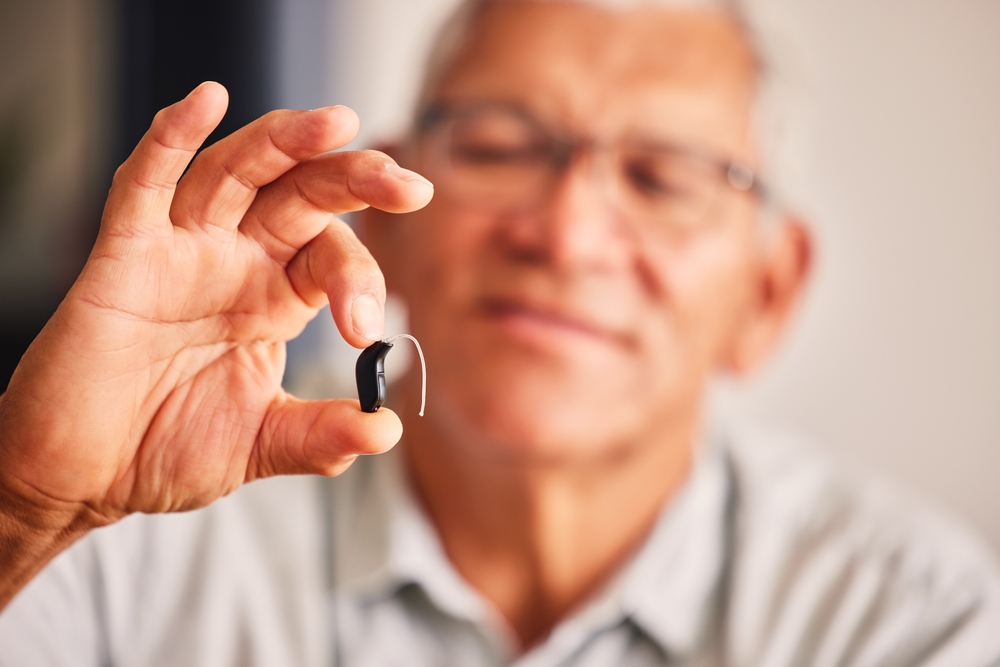
Choosing the most effective auditory device requires evaluating diagnostic findings, acoustic lifestyle factors, and the presence of hearing loss. Professionally fitted hearing aids may use directional microphones, digital noise reduction, and dedicated restaurant programs to emphasize speech from the front and reduce some competing sound. Maintaining realistic expectations remains essential, as no auditory device can isolate conversation by removing all surrounding voices.
Remote wireless microphones offer an exceptional boost to the signal-to-noise ratio in challenging venues. The microphone is placed near or worn by the speaker and sends that voice directly to compatible hearing aids or another receiver. This wireless transmission substantially diminishes the acoustic degradation caused by physical distance and ambient room noise.
Further practical hearing technology options include:
- Table microphones for small-group conversations
- Integrated telecoil programs for tapping into venue-wide induction loop systems
- Mobile speech-to-text applications delivering instant visual captions during dinner
- Advanced hearables incorporating assistive directional listening programs
- Sound-meter apps and acoustic dining directories for locating quiet venues
We analyze suitable devices, verify functional compatibility with your current setup, and guide you through real-world operation.
Professional Audiological Solutions for Loud Listening Environments
Undergoing a formal hearing evaluation takes your care beyond the limited baseline of hearing adequately in quiet spaces. We examine the challenging acoustic venues, conversational setups, and noise profiles you encounter to select appropriate diagnostic tests. The diagnostic battery may encompass pure-tone thresholds, acoustic middle-ear evaluations, suprathreshold word recognition, and speech-in-noise measures. Specialized auditory-processing testing can be ordered when patient history and preliminary audiometric findings warrant deeper neural investigation.
Sudden, one-sided, or rapidly worsening symptoms may require medical evaluation by an ear, nose, and throat physician. Individualized diagnostic care pinpoints the precise physiological etiology rather than merely blaming restaurant noise for communication struggles.
Schedule a Diagnostic Hearing Evaluation Right Away
If dining in loud spaces leaves you feeling isolated, fatigued, or guessing at missed speech, contact us to schedule a thorough hearing evaluation. Our clinical team will determine the best strategies to improve your hearing in noisy environments through custom hearing-aid programming, remote microphones, or targeted auditory rehabilitation.
Get in touch with our team to request an appointment and rediscover confident, stress-free restaurant conversations.