Hearing Tests in Southern Dallas and Ellis County
Is It Time to Have Your Hearing Tested?
Hearing loss rarely happens overnight. For most people, it develops gradually over months or years — so slowly that it can be easy to dismiss the early signs. You might find yourself turning up the TV a little more, asking people to repeat themselves, or struggling to follow conversations in noisy restaurants. These are not just frustrating moments; they are signals worth paying attention to.
At Hearing Solutions, our experienced team is here to help residents throughout Southern Dallas and Ellis Counties understand their hearing health and find the right path forward — with no pressure and no rush.
Signs You Should Schedule a Hearing Test
If you answer “yes” to any of the following questions, it may be time to schedule a professional hearing evaluation:
- Do you frequently ask others to repeat themselves?
- Do you struggle to follow conversations in noisy environments?
- Do you turn the television or radio up louder than those around you prefer?
- Do you find yourself missing parts of phone conversations?
- Do friends or family members comment on your hearing?
- Do you hear a ringing or buzzing in your ears (tinnitus)?
- Have you noticed it is easier to hear some voices than others?
Hearing loss is the third most common physical condition in the United States, after arthritis and hypertension. Catching it early gives you the best chance of protecting the hearing you have and finding effective solutions.
What Happens During a Hearing Test?
A hearing evaluation at Hearing Solutions is thorough, comfortable, and completely pain-free. Here is what you can expect:
Medical History Review
We start by learning about your health background, any medications you take, your history of noise exposure, and any concerns you or your family have noticed about your hearing.
Otoscopic Examination
Our specialist will examine the outer ear canal and eardrum using an otoscope — a small, lighted instrument — to check for any physical blockages, such as earwax buildup or signs of infection.
Pure-Tone Audiometry (Air Conduction Test)
You will wear earphones in a quiet testing environment. Tones at different pitches and volumes will be played, and you will indicate each time you hear a sound by raising your hand or pressing a button. The results are plotted on an audiogram, giving us a precise picture of your hearing ability at different frequencies.
Bone Conduction Testing
A small device placed behind the ear sends vibrations directly to the inner ear, bypassing the outer and middle ear. This test helps determine whether hearing loss is conductive (related to the ear canal or middle ear) or sensorineural (related to the inner ear or auditory nerve).
Speech Testing
You will be asked to repeat words and sentences played at different volumes. This speech recognition test helps us understand how well you process and understand speech, which is just as important as detecting tones.
Tympanometry
This quick test checks the flexibility and movement of your eardrum to identify any issues with middle ear function, including fluid buildup or eustachian tube problems.
Understanding Your Results — The Audiogram
After your tests, your specialist will walk you through your results using an audiogram — a graph that maps the softest sounds you can hear at various pitches. Your results will be classified into one of the following categories:
- Normal hearing — 0 to 25 dB
- Mild hearing loss — 26 to 40 dB
- Moderate hearing loss — 41 to 55 dB
- Moderately severe hearing loss — 56 to 70 dB
- Severe hearing loss — 71 to 90 dB
- Profound hearing loss — 91 dB or greater
Understanding your audiogram helps both you and our team make the most informed decisions about your hearing health.
Who Should Get a Hearing Test?
Hearing evaluations are recommended for people of all ages. Adults over 50 should have their hearing checked at least every three years, even without noticeable symptoms. Annual testing is recommended for anyone over 60, anyone with a known history of hearing loss, or anyone regularly exposed to loud noise at work or recreation.
You do not need a referral to visit Hearing Solutions. Simply call us or stop by our DeSoto office to schedule your appointment.

What Happens After the Test?

If your hearing test reveals any degree of hearing loss, our specialist will discuss the findings with you clearly and honestly, explain your options, and recommend next steps — whether that means monitoring your hearing over time, exploring hearing aid options, or referring you to a physician if a medical issue is suspected.
At Hearing Solutions, we are an independent practice. That means our recommendations are based entirely on what is right for you — not on what any single manufacturer requires us to sell.
Why Choose Hearing Solutions for Your Hearing Test?
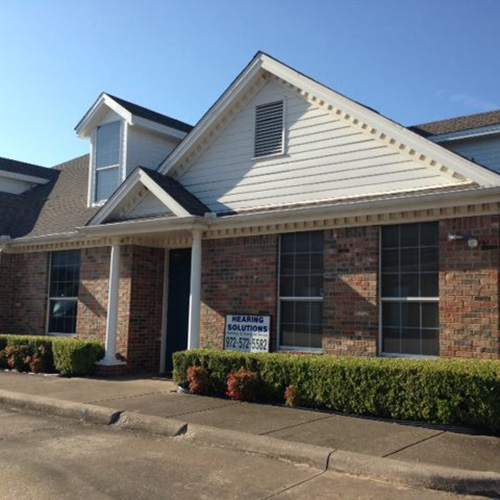
- Proudly serving Southern Dallas and Ellis County from our DeSoto location
- Independent practice with no manufacturer limitations
- Friendly, unhurried, patient-focused care
- Comprehensive evaluation including audiometric testing, tympanometry, and speech testing
- On-site follow-up services including fittings, repairs, and accessories
Frequently Asked Questions
How long does a hearing test take?
A full evaluation typically takes 60 to 90 minutes, including the consultation and review of results.
Is a hearing test painful?
Not at all. The entire process is non-invasive and comfortable.
Does insurance cover hearing tests?
Many insurance plans cover diagnostic hearing evaluations. Contact our office and we can help you understand your coverage options.
What should I bring to my appointment?
Bring a list of any medications you take, your insurance card, and — if available — any previous hearing test results. It can also be helpful to bring a family member or close friend who can share observations about your hearing.
Ready to take the first step toward better hearing?
Call us at 972-646-8320 or visit us at 2715 Bolton Boone Dr., Suite C, DeSoto, TX 75115 to schedule your comprehensive hearing test. We proudly serve DeSoto and communities throughout Southern Dallas and Ellis Counties.